Home › Blog › Powder Coating UAE
When you are buying powder coating in the UAE at volume, the decision is not about the colour card — it is about pretreatment, batch control and how many times your metalwork changes hands before it reaches site. Coastal salt, airborne dust, transport distance and finish consistency all decide whether a coating lasts a decade or fails in two summers. Al Taher Group runs its own powder coating line in Fujairah alongside metal fabrication and installation, and bulk orders usually succeed or fail on how well those three are coordinated.
The short version
- For bulk orders, the strongest supplier is normally one with in-house pretreatment, coating and fabrication — it removes handling damage, scheduling gaps and rework risk.
- QUALICOAT treats marine and industrial exposure — corrosion category C5 — as a serious corrosion environment. Pretreatment quality matters more than colour, gloss or texture.
- The UAE’s National Center of Meteorology describes a hot, arid, dust-prone climate with a long coastline and frequent PM10 events. That raises the value of a durable coated finish on any outdoor metalwork.
- Compare shops on substrate preparation, finish range, line capacity, packaging, rework policy, and whether transport and installation sit inside the same scope.
- On coastal, exposed or architecturally visible work, agree sample approval, substrate-specific pretreatment and inspection criteria before the full batch enters production.
A sensible shortlist in the UAE is built on process control, not a colour card. The questions below separate a basic coating service from a bulk-ready finishing partner — whether you are a homeowner, a main contractor, a developer or a procurement team.
Why is powder coating a higher-stakes decision in the UAE?
Because UAE conditions make pretreatment discipline matter more than most buyers expect. QUALICOAT flags marine and industrial environments — corrosion category C5 — as genuine corrosion risks for coated aluminium, and the National Center of Meteorology points to long coastlines, harsh heat and dust-heavy air carrying PM10 particulates.
Outdoor metalwork here faces salt, moisture, heat and airborne particles at once. Gates, balcony railings, pergolas, cladding trims and steel features rarely fail from one large defect. They fail from repeated exposure at edges, weld zones, drainage points and wherever surface preparation was weak.
A common mistake is assuming a thicker powder layer solves corrosion. It does not. If cleaning, pretreatment, curing or substrate handling are poor, the finish looks perfect on handover day and still loses performance years early.
For coastal or semi-coastal projects, ask how the shop treats aluminium differently from steel, how parts are cleaned before coating, and how fabricated sections are protected after curing. In the UAE, the journey from workshop to site matters as much as the oven cycle.
Why do bulk orders benefit from in-house coating and fabrication?
Because every handoff between vendors is a risk you inherit. Parts get scratched in transit, mixed between batches, or delayed while one supplier waits on another. On a large order those interruptions compound quickly and start affecting installation dates, crane bookings, site access windows and client sign-off.
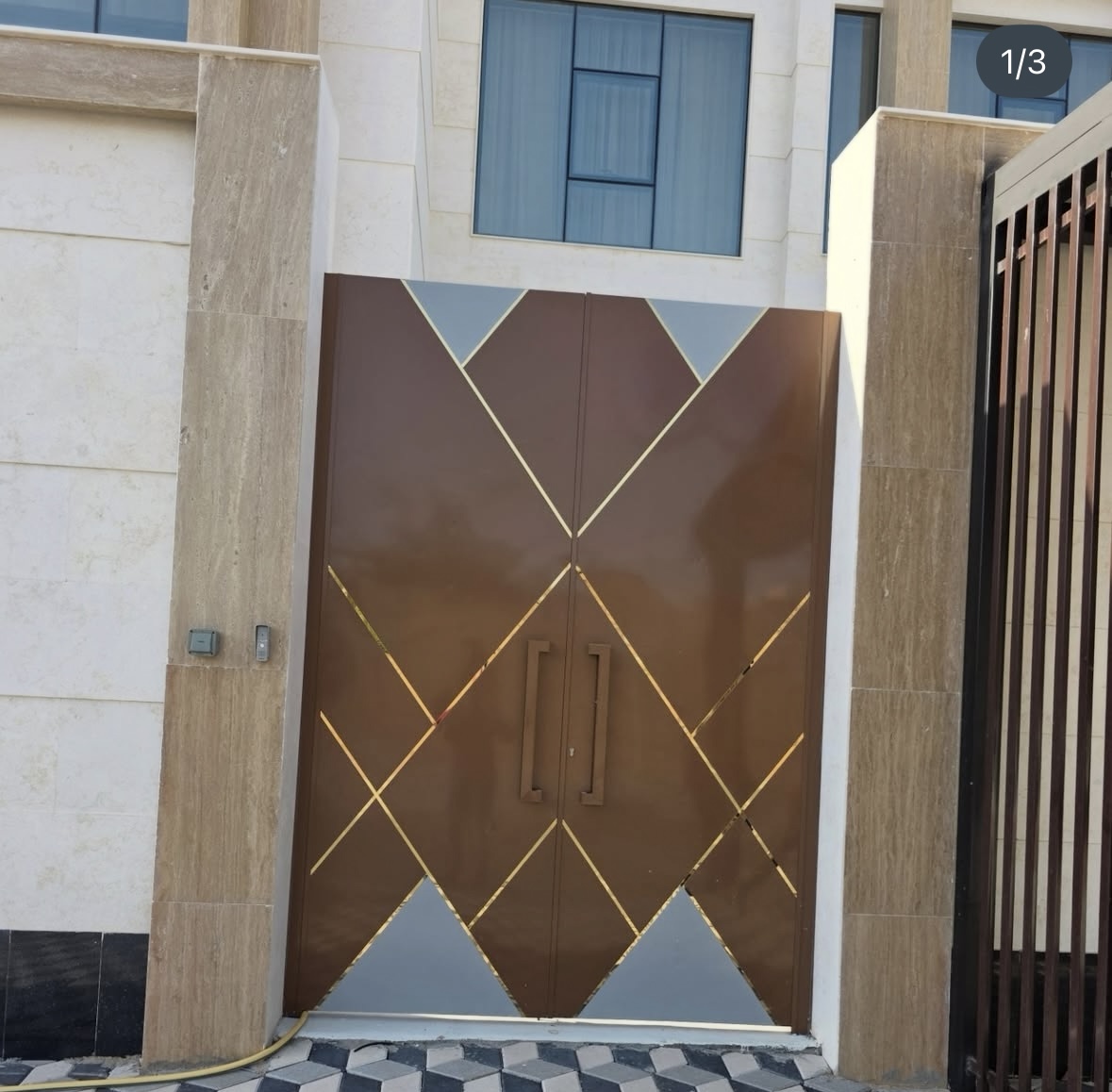
We fabricate and coat in the same operation, which is why we can plan fabrication completion, surface preparation, coating, packing and dispatch as a single programme rather than three separate queues. QUALICOAT’s natural weathering framework makes the underlying point well: coating performance is tied to system quality, not top-layer appearance. If pretreatment governs how a finish behaves over years of exposure, then operational control matters long before parts leave the workshop.
There is a commercial argument too. When one supplier fabricates, coats, packs, delivers and installs, responsibility is traceable when a batch issue appears. That does not guarantee quality by itself — but it removes the gap where accountability usually disappears.
What eight checks should your shortlist apply?
Screen coating shops on process, capacity, substrate knowledge and logistics before discussing price:
- Pretreatment method — how do they prepare aluminium versus steel before powder is applied?
- Substrate range — do they coat fabricated metalwork, profiles, panels, frames, and third-party items?
- Line and oven capacity — do batch size and maximum part dimensions suit your volume?
- Finish options — RAL range, gloss levels, matte, textured and metallic availability.
- Handling discipline — masking, hanging marks, edge protection and post-coat packaging.
- Rework policy — who owns defects, transit damage and colour mismatch between batches?
- Project scope — are delivery, installation and fabrication included or priced separately?
- Commercial clarity — itemised pricing, lead time, payment terms and volume pricing logic.
If a supplier only wants to talk about colour and price, keep asking. Bulk performance is decided in the details between fabrication completion and site delivery.
How should you specify a bulk order, step by step?
Start with substrate, environment and finish target. If those three are vague, even a capable coater can deliver a batch that is technically correct and commercially wrong.
Step 1 — define what is being coated. Mild steel, galvanised steel or aluminium. Include dimensions, weld conditions, and whether drilling, cutting or site modification happens after coating. If post-coat cutting is planned, the sequence may need to change.
Step 2 — define where the items will live. Indoor lobby partitions, villa gates, coastal balustrades and facade screens do not face the same risk. If the installation is near the sea or in a sheltered damp zone, say so early. Ordering an “outdoor finish” without naming the real exposure is a common and expensive shortcut.
Step 3 — define how the finish should look. State the RAL colour, gloss preference, texture and visible-face expectations. Where appearance is critical, ask for a control sample or approval panel before full production. This matters most on mixed batches where stair railings, doors and trims must visually match. Our line handles every RAL colour plus textured, matte, gloss and metallic finishes.
Step 4 — define acceptance criteria. Agree who checks colour consistency, visible defects, edge quality and packaging before dispatch. On phased projects, lock the approved finish reference from phase one so later batches stay aligned.
Powder coating or wet paint for bulk metalwork?
For repeatable factory-finished metalwork, powder coating is normally the better bulk option. Wet paint still earns its place for site touch-ups, oversize components, and assemblies that cannot pass through an oven after fabrication.
Powder coating gives a consistent factory finish across many parts, which suits railings, frames, gates, window metalwork, screens and fabricated architectural elements where repeatability matters. It also batch-processes efficiently once pretreatment and curing are controlled.
Wet paint is the better answer when a part is too large for the line, when post-install welding is unavoidable, or when on-site repairability matters more than an identical factory finish. That is the trade-off buyers most often miss: the right finish depends on the manufacturing sequence, not on hardness or gloss alone. If part geometry traps contamination, includes inaccessible cavities, or demands major site alteration after finishing, the practical answer may not be powder.
How do you compare quotes without missing hidden costs?
The best quote is the most complete one, not the cheapest line. Separate fabrication, pretreatment, coating, transport, installation and rework risk before comparing totals.
Normalise the scope first. One quote may include collection, delivery and packing; another excludes all three. One supplier prices fabricated and coated items together; another assumes third-party fabrication arrives ready to hang. Compare those totals unadjusted and the cheapest number becomes the most expensive job.
Then test the assumptions. Is the price based on part count, surface area, weight or a batch minimum? Are touch-ups, remakes and protected transport included? If a supplier says “standard finish”, ask what standard means in writing. We issue itemised quotations within 24 hours of the site visit, with trade pricing on volume — that is the level of detail worth asking any supplier to match.
Finally, price the schedule risk. If a lower quote depends on external transport between fabricator and coater, ask what happens when one vendor slips. On bulk orders, lost time routinely costs more than the original price gap.
In-house line or outsourced finishing chain?
The difference is how many handoffs your metalwork passes through before installation. An in-house line means fewer scratches, fewer mixed batches and clearer responsibility when a defect appears — and it helps when a few parts need an urgent remake, because the coater is not queuing behind an outside workshop.
An outsourced chain is still right where a project needs specialist chemistry, overflow capacity, or a line larger than the main fabricator operates. The cost is coordination. If you take that route, insist on clear tagging, batch control and inspection at every transfer point.
The practical test: if your project needs one supplier to fabricate, finish and install visible metalwork on a tight programme, in-house control is usually worth more than a slightly lower coating-only rate. Our fabrication division →
How should you inspect coated metalwork before delivery?
Focus on consistency, edges and handling marks — not just the face. Most avoidable disputes start in the areas buyers never checked before the truck left.
Begin with colour and finish consistency, under good light, against the approved sample. Look across multiple parts from the same batch; slight differences only become obvious when pieces sit side by side on site.
Then inspect the vulnerable zones: edges, corners, welds, holes, mounting points and cut interfaces. That is where a coating system shows its real discipline, and a glossy front face distracts from a weak return edge.
Finally, inspect packaging and the transport plan. Bulk-coated parts need separators, wrapping and loading methods that prevent metal-to-metal contact — parts stacked carelessly arrive damaged even when the coating was faultless. If items go straight to installation, check the site sequence too: a perfect workshop finish is easily ruined by premature unloading, crowded storage or follow-on trades working too close.
Which finishes and environments need extra caution?
Coastal sites, dark colours, metallic finishes and highly visible architectural elements need the strictest control. In the UAE, environment and appearance expectations often combine to make an order more demanding than it first appears.
Near the coast, assume salt exposure is part of the design brief. Maritimt Udstyr makes the same point for marine environments, treating salt rich air as a system wide durability risk rather than a single surface problem — QUALICOAT’s references to marine and C5-type conditions exist precisely for this. Dark or high-gloss finishes make defects easier to see, so appearance control tightens. Metallic finishes can show batch-to-batch variation across large facades or long railing runs. Heavy textures hide minor surface variation but change the cleaning profile and visual sharpness.
For anything touched daily — a gate, a door, a handrail — ask how the chosen texture and sheen behave in use. Matte and textured finishes hide fingerprints better than high gloss, but neither disguises poor fabrication underneath.
The point is straightforward: in the UAE, finish selection is not only a design decision. It is an exposure decision, a maintenance decision and a logistics decision at the same time. Buyers who connect all four get better results from the start. See our powder coating line →
Itemised quotation within 24 hours of the visit — trade pricing on volume orders.
Frequently Asked Questions
What is the best powder coating supplier in the UAE for bulk orders?
The strongest choice is normally a supplier that controls pretreatment, coating and fabrication in-house, because it removes handling damage, scheduling gaps and rework risk between vendors. Judge shortlists on substrate preparation, line capacity, packaging discipline and rework policy rather than on price per square metre alone.
Does coastal air in the UAE affect powder coating?
Significantly. QUALICOAT treats marine and industrial exposure — corrosion category C5 — as a serious corrosion environment, and salt-laden air attacks edges, weld zones and drill points first. Correct pretreatment matters more than film thickness for coastal durability.
Is powder coating better than paint for bulk metalwork?
For repeatable factory-finished items — railings, gates, frames, screens — powder coating is normally better because it batch-processes to a consistent finish. Wet paint remains the right answer for oversize components, post-install welding, and situations where on-site repairability matters more than an identical factory finish.
What should a bulk powder coating quotation include?
Fabrication, pretreatment, coating, transport, installation and rework risk should each be visible as separate lines. Confirm whether pricing is by part count, surface area, weight or batch minimum, and whether collection, delivery, packing and touch-ups are inside the scope or excluded.
How do you check powder-coated parts before they leave the workshop?
Inspect colour consistency across multiple parts from the same batch under good light against the approved sample, then check edges, corners, welds, holes and cut interfaces. Finally check packaging — separators and wrapping that prevent metal-to-metal contact in transit.
Do you powder coat items you did not fabricate?
Yes — we accept contractor and third-party work subject to dimensions and preparation requirements. Send sizes and the finish specification and we will advise during the site visit or over WhatsApp.